RoomLedger Data Privacy Checklist Before Sharing
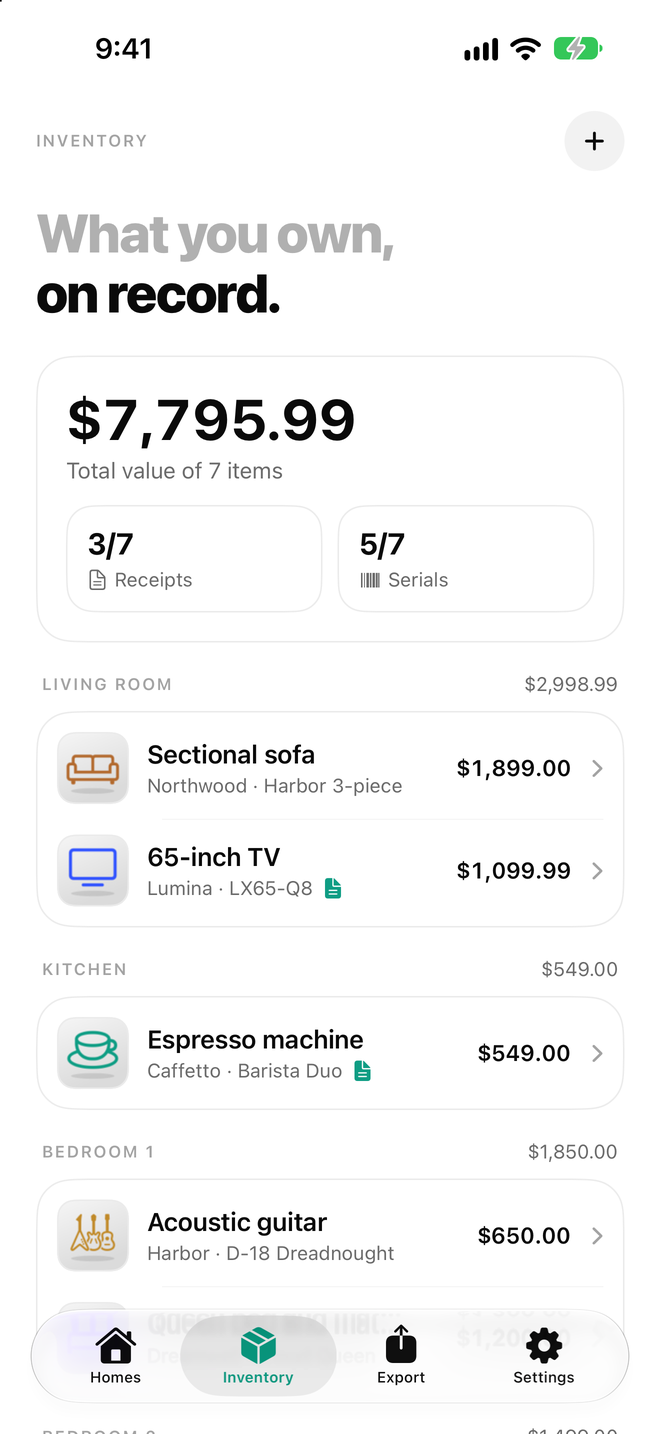
A property record may contain an address, signatures, interior photos, equipment serial numbers, insurance details and valuable property. Before sending, balance useful evidence with privacy. RoomLedger organizes and exports packages, but you decide what must be shared.
Define recipient and purpose
A landlord may need condition evidence, a contractor may need only the repair area, and an insurer may need inventory. No recipient automatically needs the whole ZIP. Write purpose and scope before export and never include another property by mistake.
Remove unrelated information
Remove faces, documents, letters, unnecessary addresses, private property and unrelated signatures. Keep a secure internal source and create a separate sharing package. Do not edit away a defect that the package is meant to prove. Inspect mirrors, screens and image metadata when policy requires it.
Check files, permissions and retention
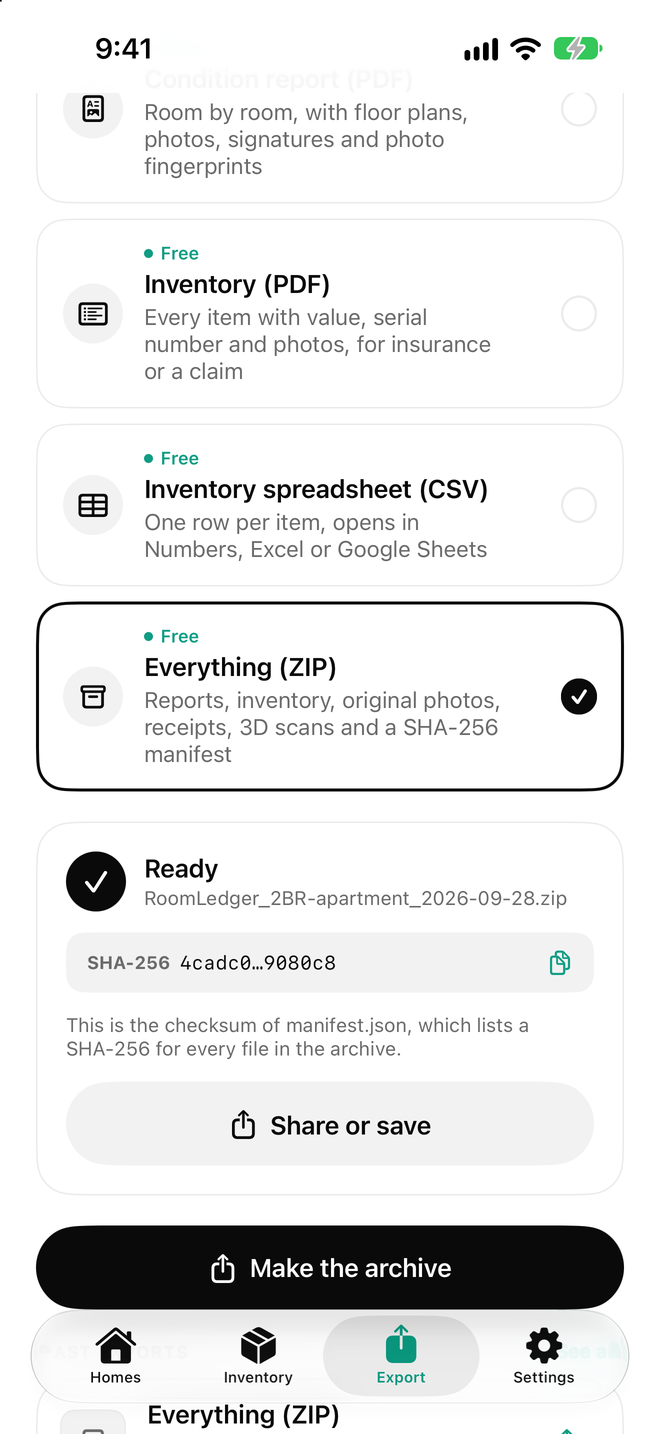
Open PDF, CSV and ZIP and verify property, date, room and attachments. Check who can view, download, edit or delete a link or folder, and record recipient, date and version. Keep the original and a dated snapshot, test restore before removing files from the phone, and delete copies according to an approved process, including synced folders and trash.
Serial numbers and signatures can link a person to a property, so send them only when needed and use an expiring package where possible. Privacy applies during capture, storage, sharing and deletion, not only at the final step.
Note: Follow the lease, privacy policy, insurer requirements and local data-protection rules.
A practical workflow for this topic
When you search for “RoomLedger Data Privacy Checklist Before Sharing”, the useful answer is usually a repeatable way to check the detail that matters. Use this RoomLedger guide as a starting point, then confirm the current source before acting. The product can organize information and shorten a review; it cannot fill in missing facts or replace a professional decision.
Quick checklist before you act
- Define the room, asset or handover moment you are recording.
- Capture wide context, close details, dates and measurements together.
- Review notes and photos before creating the report or sharing it.
- Keep the original export when a later comparison or dispute may matter.
Keep the decision traceable: record the version, date and source you relied on when the detail may change.
Detailed step-by-step workflow
This extended section turns “RoomLedger Data Privacy Checklist Before Sharing” into a repeatable RoomLedger workflow. The goal is not to create a longer checklist for its own sake. It is to make the important inputs visible, show what should be checked first, and leave a useful record of what was known at the time. That approach is especially helpful for room inspections, condition evidence, measurements, inventory and reports. Read the steps in order the first time, then return to the relevant step when the situation changes.
Step 1: Define the question and the record you need.
Start with this action in RoomLedger, then pause long enough to verify the result against the original source or observation. For “RoomLedger Data Privacy Checklist Before Sharing”, record the date, the relevant context and anything that was not available. A structured record is more useful when another person can understand what was checked without guessing what happened between two screenshots, notes or exports.
Step 2: Gather the original inputs before interpreting the result.
Start with this action in RoomLedger, then pause long enough to verify the result against the original source or observation. For “RoomLedger Data Privacy Checklist Before Sharing”, record the date, the relevant context and anything that was not available. A structured record is more useful when another person can understand what was checked without guessing what happened between two screenshots, notes or exports.
Step 3: Review the result and record uncertainty or missing data.
Start with this action in RoomLedger, then pause long enough to verify the result against the original source or observation. For “RoomLedger Data Privacy Checklist Before Sharing”, record the date, the relevant context and anything that was not available. A structured record is more useful when another person can understand what was checked without guessing what happened between two screenshots, notes or exports.
Step 4: Save the version, date and next action for later comparison.
Start with this action in RoomLedger, then pause long enough to verify the result against the original source or observation. For “RoomLedger Data Privacy Checklist Before Sharing”, record the date, the relevant context and anything that was not available. A structured record is more useful when another person can understand what was checked without guessing what happened between two screenshots, notes or exports.
Quality checks and common mistakes
Long-form guidance is most useful when it explains the boundaries as well as the happy path. Before relying on a RoomLedger record, run the checks below. They help separate a missing input from a negative result, an approximate value from a verified value, and a convenient summary from the original evidence.
Check 1
Do not start with the conclusion. Write down the question, the person or property involved and the time period first. In RoomLedger, keep the source, context and limitation close to the record so the next review can reproduce the decision.
Check 2
Do not mix old and new records without a date. Keep the original observation visible when you add a correction or update. In RoomLedger, keep the source, context and limitation close to the record so the next review can reproduce the decision.
Check 3
Do not treat a missing field as proof that the event, ingredient, expense or condition does not exist. In RoomLedger, keep the source, context and limitation close to the record so the next review can reproduce the decision.
Check 4
Do not share a polished summary before checking the original image, note, label, receipt or export behind it. In RoomLedger, keep the source, context and limitation close to the record so the next review can reproduce the decision.
Check 5
Do not use an app record as a substitute for a professional, medical, legal, financial or safety decision when the situation requires one. In RoomLedger, keep the source, context and limitation close to the record so the next review can reproduce the decision.
Frequently asked questions
What should I verify before I rely on this guide?
For “RoomLedger Data Privacy Checklist Before Sharing”, use RoomLedger to organize the observation and then verify the part that affects the decision. If a source, image, measurement or input is incomplete, mark it as incomplete instead of silently filling the gap. Add a date and a short note about the method used. When the consequence is important or the question sits outside the product’s purpose, confirm it with the current official source or an appropriate professional.
What should I do when the information is incomplete?
For “RoomLedger Data Privacy Checklist Before Sharing”, use RoomLedger to organize the observation and then verify the part that affects the decision. If a source, image, measurement or input is incomplete, mark it as incomplete instead of silently filling the gap. Add a date and a short note about the method used. When the consequence is important or the question sits outside the product’s purpose, confirm it with the current official source or an appropriate professional.
How can I make the record easier to compare later?
For “RoomLedger Data Privacy Checklist Before Sharing”, use RoomLedger to organize the observation and then verify the part that affects the decision. If a source, image, measurement or input is incomplete, mark it as incomplete instead of silently filling the gap. Add a date and a short note about the method used. When the consequence is important or the question sits outside the product’s purpose, confirm it with the current official source or an appropriate professional.
When should I ask for another source or a specialist?
For “RoomLedger Data Privacy Checklist Before Sharing”, use RoomLedger to organize the observation and then verify the part that affects the decision. If a source, image, measurement or input is incomplete, mark it as incomplete instead of silently filling the gap. Add a date and a short note about the method used. When the consequence is important or the question sits outside the product’s purpose, confirm it with the current official source or an appropriate professional.
A practical review before you finish
Before closing this topic, read the title “RoomLedger Data Privacy Checklist Before Sharing” as a question rather than a promise. Confirm the current version of the information, check the original evidence, and record the next action in RoomLedger. A useful record says what was observed, when it was observed, what remains uncertain and who should review it next. This makes the article easier to apply today and easier to revisit when the facts change.
See the product in action
Related guides
RoomLedger privacy FAQ: how are photos, addresses and signatures handled?
Answer common questions about RoomLedger photos, addresses, signatures, RoomPlan, exports and on-device data.
Is RoomLedger for Renters or Landlords?
See how renters, landlords and homeowners can use RoomLedger for condition reports, inventory and structured exports.
How to prepare a repair request record with RoomLedger
Record a repair request by room, photo, date, severity and timeline so a landlord or manager can review the right issue.
Feature walkthroughs
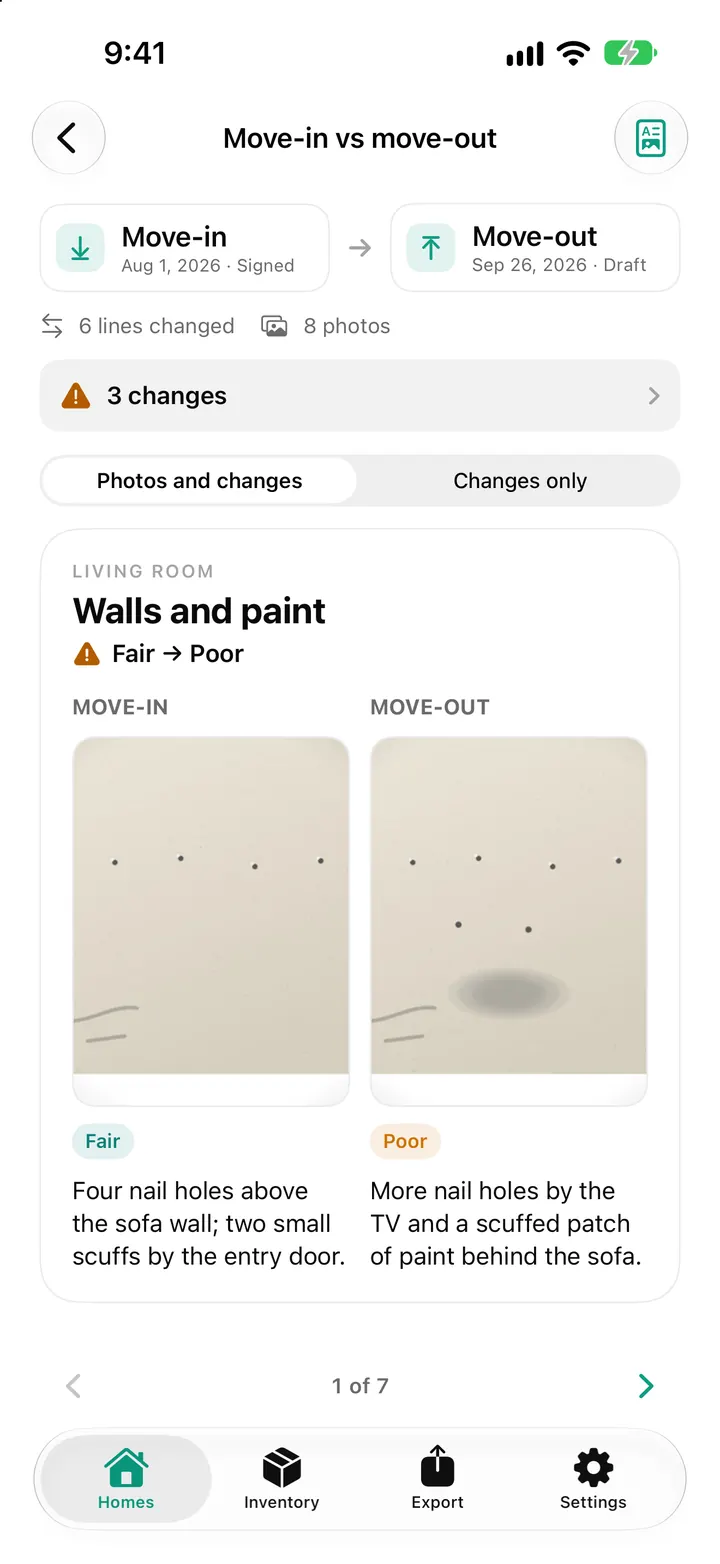
Compare move-in and move-out side by side, line by line, with photos from both days
RoomLedger pairs each move-out line with the signed move-in, shows both photos with their dates, flags what got worse and exports it all as a Comparison PDF.
Read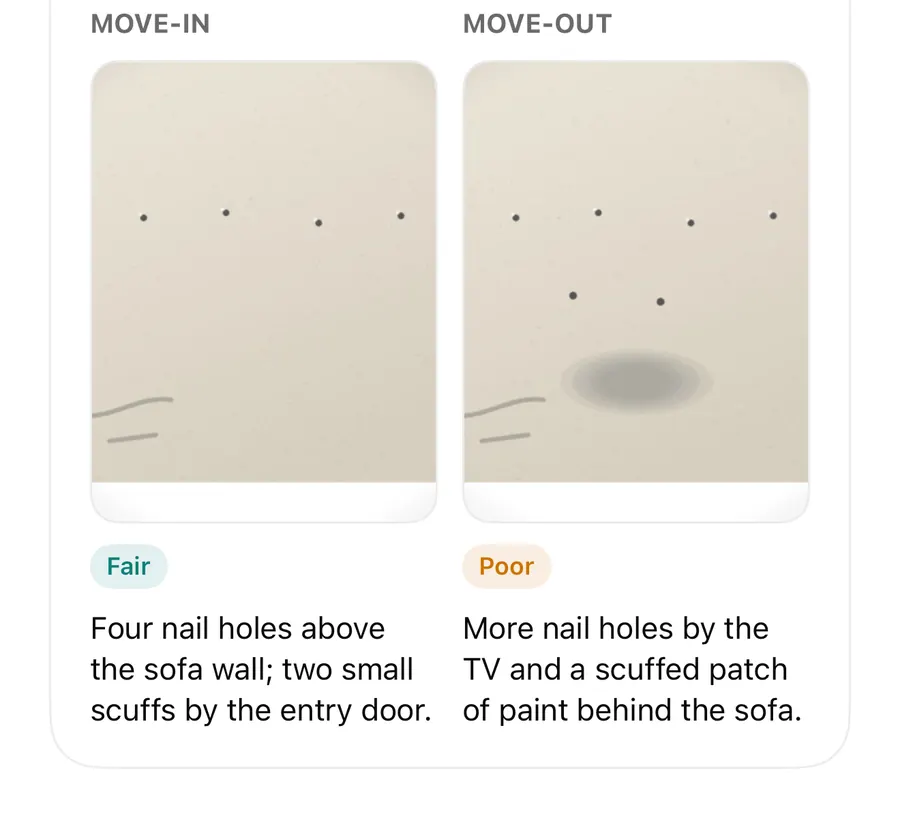
Track a security deposit in RoomLedger: your deadline, reminders and itemized charges
Record the deposit, count down to the deadline from your lease with iPhone reminders, then itemize charges against move-out changes and export a Statement PDF.
Read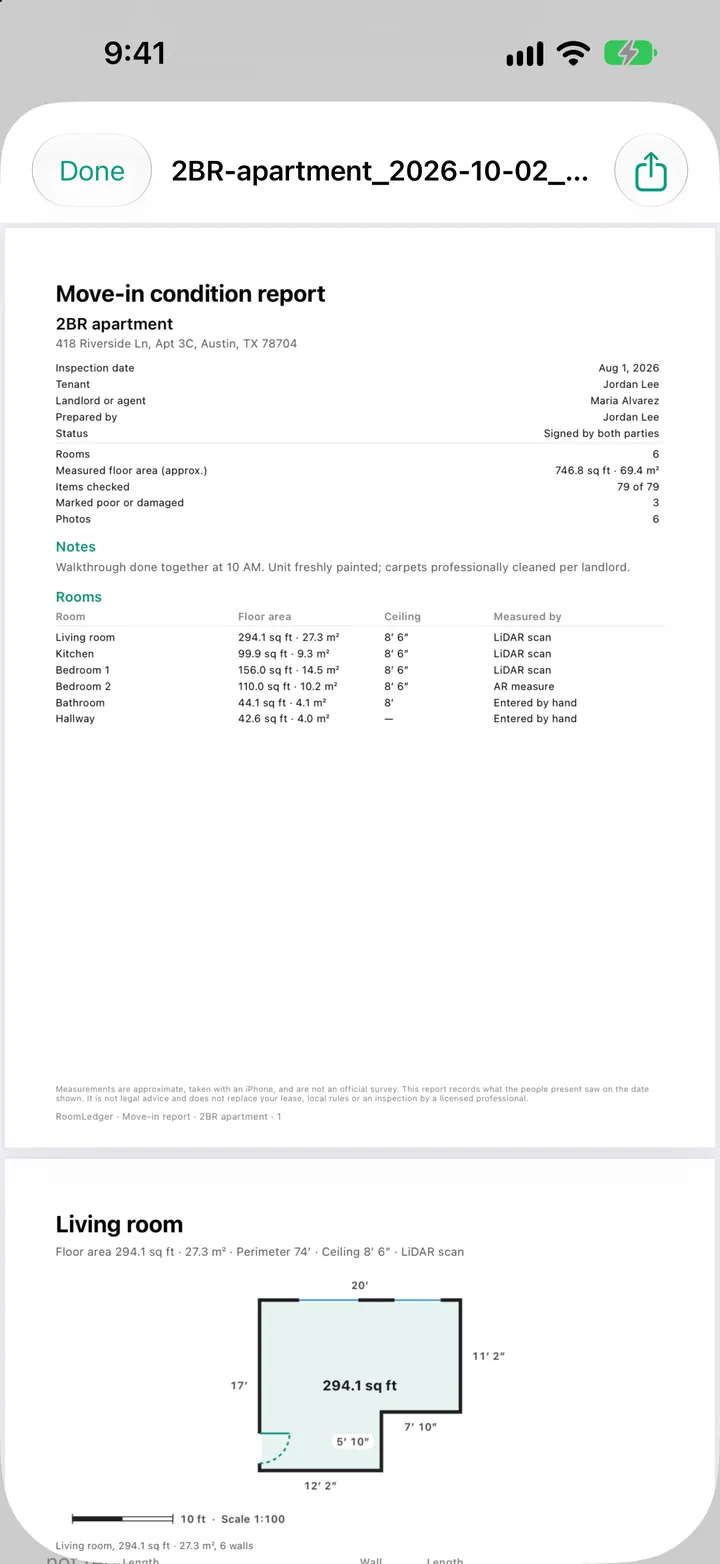
Inside the RoomLedger condition report PDF: rooms, photos and SHA-256 fingerprints
What a RoomLedger condition report PDF holds, from floor plans and numbered photos to SHA-256 photo fingerprints, a verification code, password and face blur.
Read