What Does a Signature on a Handover Record Mean?
A signature may show that someone saw or confirmed content at a particular time, but its meaning depends on the lease, signing method, local law and the complete evidence. A signature on a blank or vague report does not resolve a dispute. RoomLedger organizes content, dates, images and exports; it does not make every report legally binding.
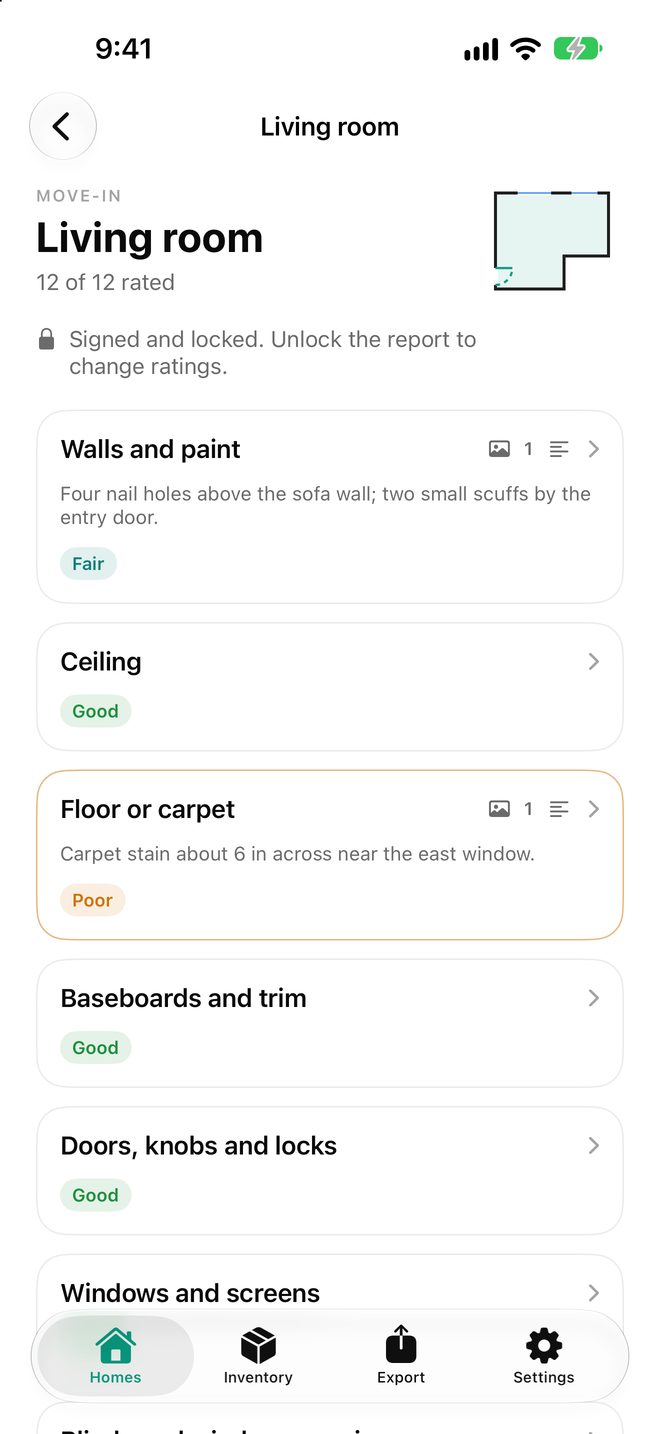
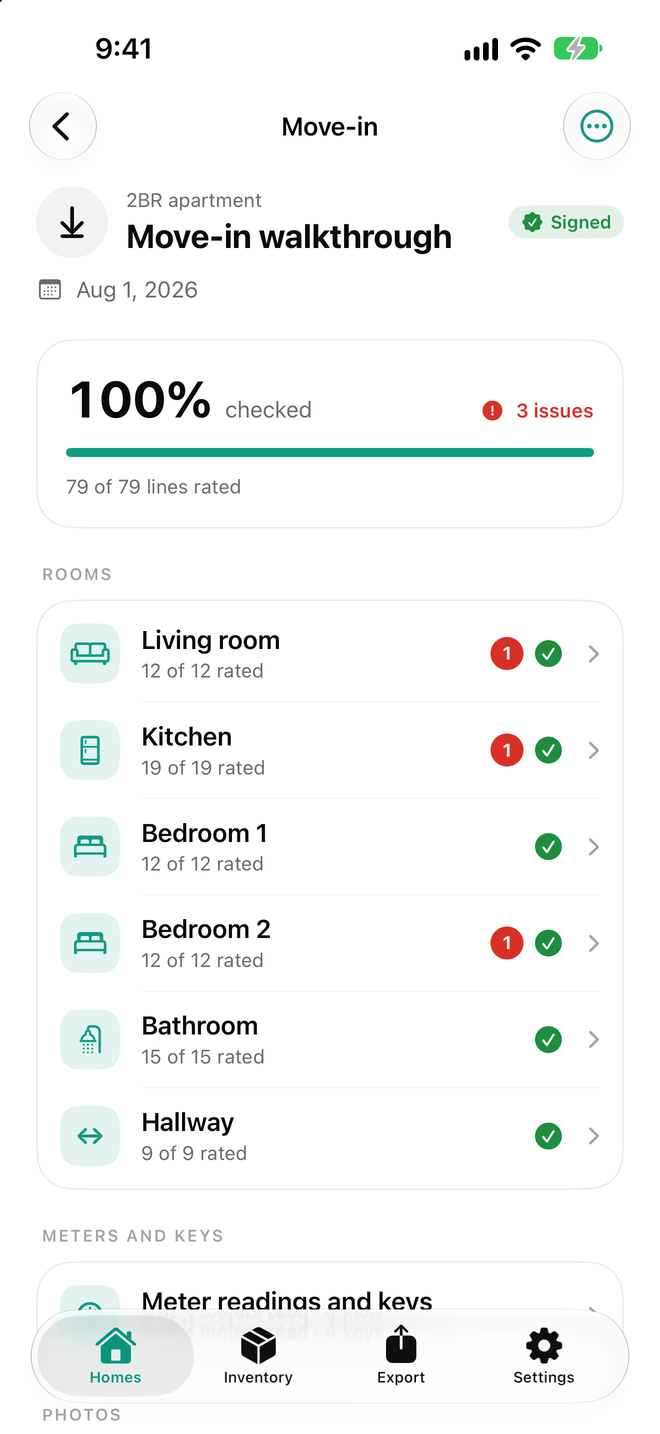
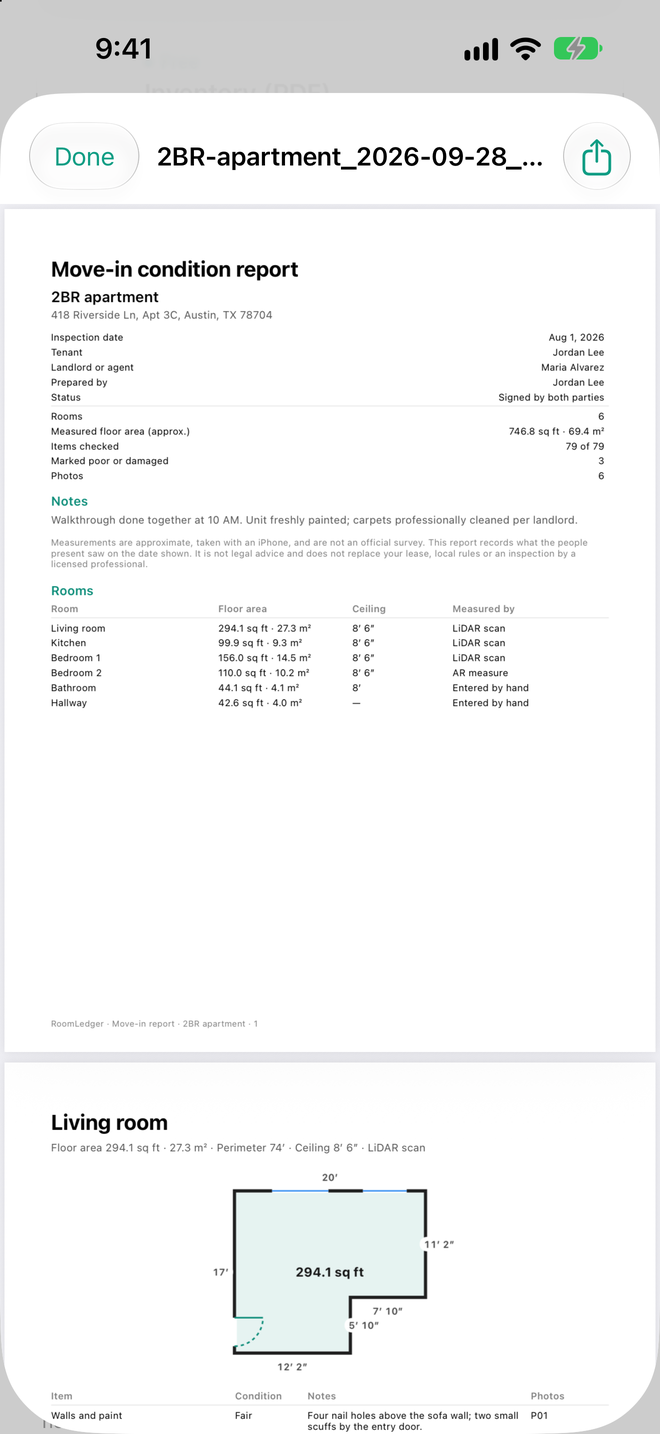
Before signing, identify property, rooms, date, participants, meter readings, keys, inventory, damage and open items. Link contextual photos to descriptions. Keep the viewed version, originals, addenda and messages. Record signing time and method; after signing, create a new version rather than silently editing. For electronic signatures, ask the parties what must be retained and verified.
RoomLedger can prepare property, room, inventory, photos and report. Start with RoomLedger. Export PDF for reading, ZIP for images and CSV for filtering, then check names, page count and openability. If a report concerns a deposit, repairs, insurance, commercial terms or a dispute, ask an appropriate professional rather than assuming a court or insurer will accept it.
Note: RoomLedger does not authenticate signatures or provide legal advice.
A practical workflow for this topic
When you search for “What Does a Signature on a Handover Record Mean?”, the useful answer is usually a repeatable way to check the detail that matters. Use this RoomLedger guide as a starting point, then confirm the current source before acting. The product can organize information and shorten a review; it cannot fill in missing facts or replace a professional decision.
Quick checklist before you act
- Define the room, asset or handover moment you are recording.
- Capture wide context, close details, dates and measurements together.
- Review notes and photos before creating the report or sharing it.
- Keep the original export when a later comparison or dispute may matter.
Keep the decision traceable: record the version, date and source you relied on when the detail may change.
Detailed step-by-step workflow
This extended section turns “What Does a Signature on a Handover Record Mean?” into a repeatable RoomLedger workflow. The goal is not to create a longer checklist for its own sake. It is to make the important inputs visible, show what should be checked first, and leave a useful record of what was known at the time. That approach is especially helpful for room inspections, condition evidence, measurements, inventory and reports. Read the steps in order the first time, then return to the relevant step when the situation changes.
Step 1: Define the question and the record you need.
Start with this action in RoomLedger, then pause long enough to verify the result against the original source or observation. For “What Does a Signature on a Handover Record Mean?”, record the date, the relevant context and anything that was not available. A structured record is more useful when another person can understand what was checked without guessing what happened between two screenshots, notes or exports.
Step 2: Gather the original inputs before interpreting the result.
Start with this action in RoomLedger, then pause long enough to verify the result against the original source or observation. For “What Does a Signature on a Handover Record Mean?”, record the date, the relevant context and anything that was not available. A structured record is more useful when another person can understand what was checked without guessing what happened between two screenshots, notes or exports.
Step 3: Review the result and record uncertainty or missing data.
Start with this action in RoomLedger, then pause long enough to verify the result against the original source or observation. For “What Does a Signature on a Handover Record Mean?”, record the date, the relevant context and anything that was not available. A structured record is more useful when another person can understand what was checked without guessing what happened between two screenshots, notes or exports.
Step 4: Save the version, date and next action for later comparison.
Start with this action in RoomLedger, then pause long enough to verify the result against the original source or observation. For “What Does a Signature on a Handover Record Mean?”, record the date, the relevant context and anything that was not available. A structured record is more useful when another person can understand what was checked without guessing what happened between two screenshots, notes or exports.
Quality checks and common mistakes
Long-form guidance is most useful when it explains the boundaries as well as the happy path. Before relying on a RoomLedger record, run the checks below. They help separate a missing input from a negative result, an approximate value from a verified value, and a convenient summary from the original evidence.
Check 1
Do not start with the conclusion. Write down the question, the person or property involved and the time period first. In RoomLedger, keep the source, context and limitation close to the record so the next review can reproduce the decision.
Check 2
Do not mix old and new records without a date. Keep the original observation visible when you add a correction or update. In RoomLedger, keep the source, context and limitation close to the record so the next review can reproduce the decision.
Check 3
Do not treat a missing field as proof that the event, ingredient, expense or condition does not exist. In RoomLedger, keep the source, context and limitation close to the record so the next review can reproduce the decision.
Check 4
Do not share a polished summary before checking the original image, note, label, receipt or export behind it. In RoomLedger, keep the source, context and limitation close to the record so the next review can reproduce the decision.
Check 5
Do not use an app record as a substitute for a professional, medical, legal, financial or safety decision when the situation requires one. In RoomLedger, keep the source, context and limitation close to the record so the next review can reproduce the decision.
Frequently asked questions
What should I verify before I rely on this guide?
For “What Does a Signature on a Handover Record Mean?”, use RoomLedger to organize the observation and then verify the part that affects the decision. If a source, image, measurement or input is incomplete, mark it as incomplete instead of silently filling the gap. Add a date and a short note about the method used. When the consequence is important or the question sits outside the product’s purpose, confirm it with the current official source or an appropriate professional.
What should I do when the information is incomplete?
For “What Does a Signature on a Handover Record Mean?”, use RoomLedger to organize the observation and then verify the part that affects the decision. If a source, image, measurement or input is incomplete, mark it as incomplete instead of silently filling the gap. Add a date and a short note about the method used. When the consequence is important or the question sits outside the product’s purpose, confirm it with the current official source or an appropriate professional.
How can I make the record easier to compare later?
For “What Does a Signature on a Handover Record Mean?”, use RoomLedger to organize the observation and then verify the part that affects the decision. If a source, image, measurement or input is incomplete, mark it as incomplete instead of silently filling the gap. Add a date and a short note about the method used. When the consequence is important or the question sits outside the product’s purpose, confirm it with the current official source or an appropriate professional.
When should I ask for another source or a specialist?
For “What Does a Signature on a Handover Record Mean?”, use RoomLedger to organize the observation and then verify the part that affects the decision. If a source, image, measurement or input is incomplete, mark it as incomplete instead of silently filling the gap. Add a date and a short note about the method used. When the consequence is important or the question sits outside the product’s purpose, confirm it with the current official source or an appropriate professional.
A practical review before you finish
Before closing this topic, read the title “What Does a Signature on a Handover Record Mean?” as a question rather than a promise. Confirm the current version of the information, check the original evidence, and record the next action in RoomLedger. A useful record says what was observed, when it was observed, what remains uncertain and who should review it next. This makes the article easier to apply today and easier to revisit when the facts change.
See the product in action
Related guides
What do RoomLedger signatures and reports mean legally?
Understand the role and limits of RoomLedger signatures and reports when recording property condition and sharing evidence.
How to Recheck a Suspicious RoomLedger Measurement
Find and recheck an unusual RoomLedger measurement using photos, units, endpoints and an independent method.
What Context Makes Tenant Photos Easier to Compare?
Add room, location, captions and dates to tenant condition photos in RoomLedger while protecting privacy.
Feature walkthroughs
Voice notes in RoomLedger: dictate on device and talk through a room
Dictate checklist notes on your iPhone, or talk through a room and review suggested ratings and notes from Apple Intelligence. Nothing changes until you accept.
Read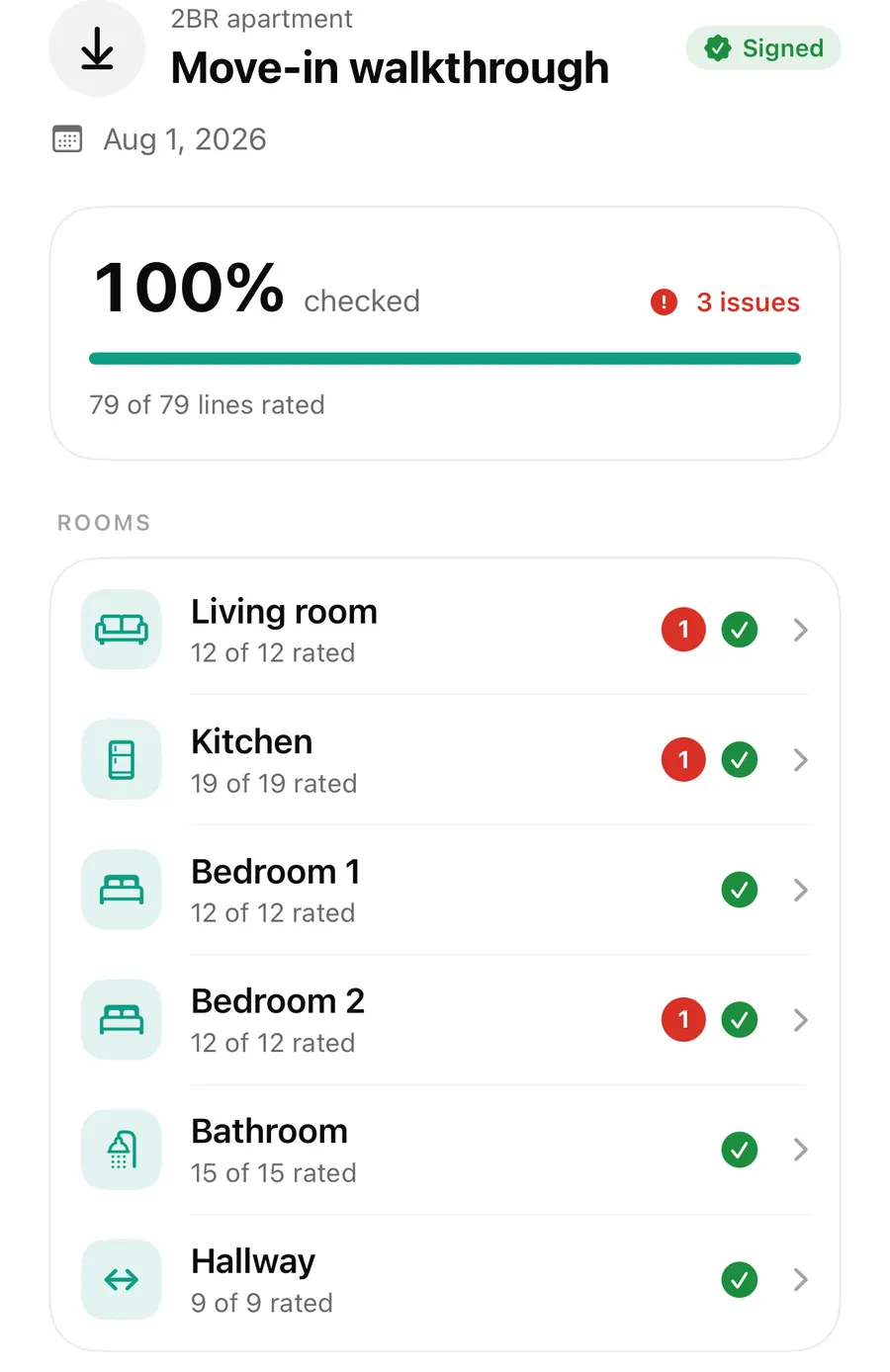
Record meter readings and keys in RoomLedger, with the camera reading the digits
Log electric, gas and water meters and every key at move-in and move-out. RoomLedger reads meter digits with the camera, keeps the photo and you confirm it.
Read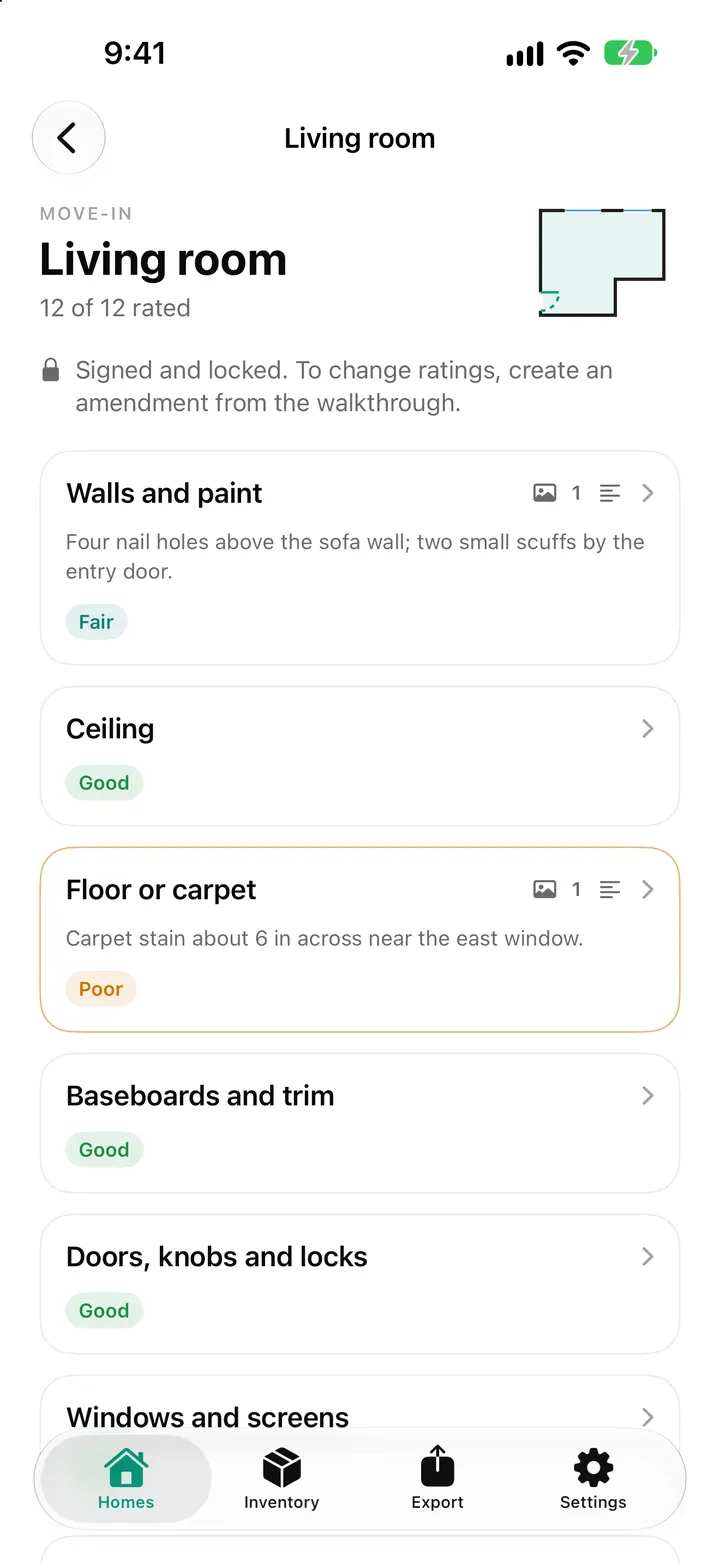
Sign a condition report on iPhone, then fix it with an amendment instead of an edit
Tenant and landlord sign the RoomLedger report on screen, which locks it. Later changes go into an amendment both sign again, and earlier versions stay on file.
Read