How to Record Each Room’s Condition at Move-In
The move-in condition record gives the renter and landlord a shared starting point. “The room is fine” is too broad for a later comparison. Record by room, take contextual photos, describe visible damage, list equipment and mark what could not be checked. RoomLedger can organize these layers as a property, rooms, inventory and report.
Map the rooms first
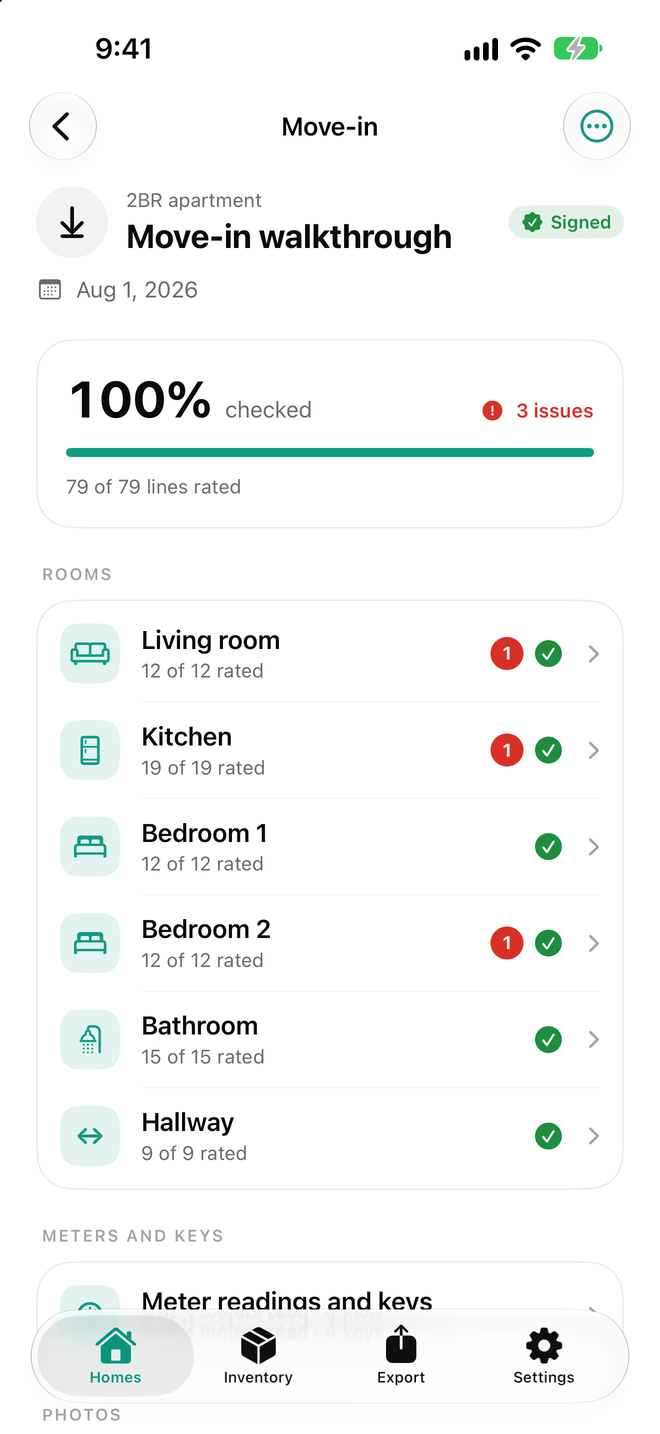
Use consistent names for living room, kitchen, bedrooms, bathroom, storage, balcony and shared areas. Take a photo from each doorway to establish layout. Then use a clockwise route or another fixed order to cover walls, floor, ceiling, doors, windows, outlets and equipment. Repeating the route helps at move-out.
Describe condition with a location
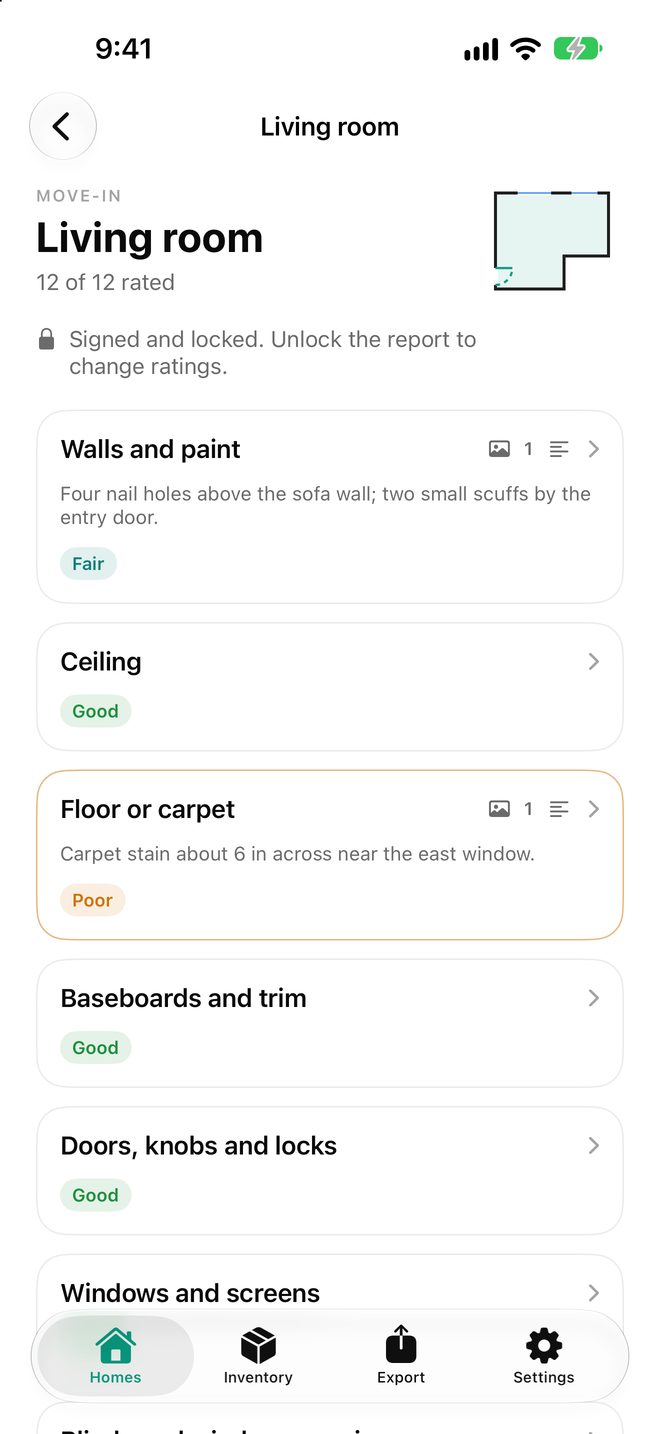
Instead of “damaged wall,” write “scratch to the left of the bedroom window, approximately … long.” Take a wide image and a close-up, with date and caption. If the size is not measured, call it an estimate. Do not infer cause or responsibility from a surface observation.
Record equipment and accessories
List cooker, oven, fridge, washing machine, lights, curtains, sofa, bed and supplied property. Add brand, model, serial number, quantity, condition and accessories. For an untested appliance, write “not checked,” not “working.” Link label and context photos to the same item.
Package it in RoomLedger
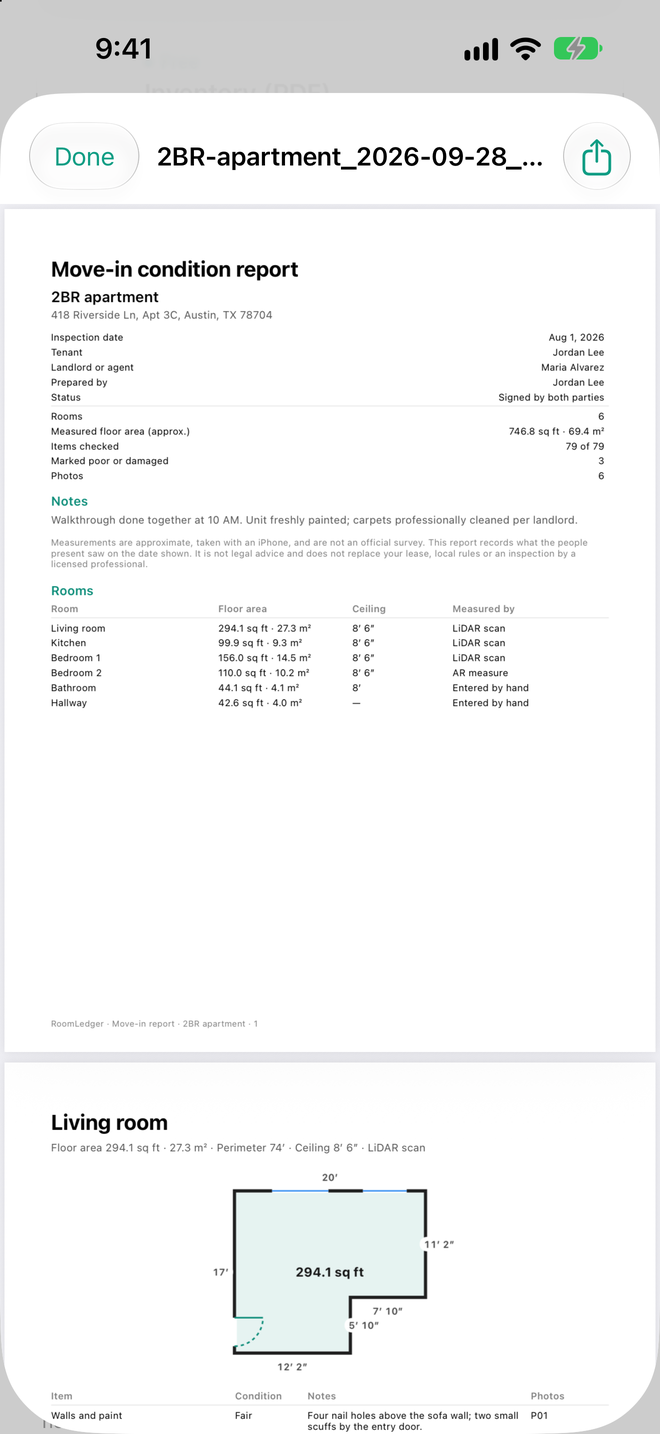
RoomLedger groups photos and notes by property and room and can add measurements, inventory and reports. See RoomLedger. Read the record as someone absent at handover: can they identify the room, date and issue location? Export PDF for reading, CSV for filtering and ZIP for original images as needed.
Before sharing, remove unrelated photos, personal documents and other people’s data. Keep originals and do not rewrite history. Follow the lease deadline for damage notices. A report does not automatically become a legal conclusion when a deposit or dispute is involved; preserve the documents and ask for advice.
Note: RoomLedger organizes evidence but does not replace a lease, inspection or legal advice.
A practical workflow for this topic
When you search for “How to Record Each Room’s Condition at Move-In”, the useful answer is usually a repeatable way to check the detail that matters. Use this RoomLedger guide as a starting point, then confirm the current source before acting. The product can organize information and shorten a review; it cannot fill in missing facts or replace a professional decision.
Quick checklist before you act
- Define the room, asset or handover moment you are recording.
- Capture wide context, close details, dates and measurements together.
- Review notes and photos before creating the report or sharing it.
- Keep the original export when a later comparison or dispute may matter.
Keep the decision traceable: record the version, date and source you relied on when the detail may change.
Detailed step-by-step workflow
This extended section turns “How to Record Each Room’s Condition at Move-In” into a repeatable RoomLedger workflow. The goal is not to create a longer checklist for its own sake. It is to make the important inputs visible, show what should be checked first, and leave a useful record of what was known at the time. That approach is especially helpful for room inspections, condition evidence, measurements, inventory and reports. Read the steps in order the first time, then return to the relevant step when the situation changes.
Step 1: Define the question and the record you need.
Start with this action in RoomLedger, then pause long enough to verify the result against the original source or observation. For “How to Record Each Room’s Condition at Move-In”, record the date, the relevant context and anything that was not available. A structured record is more useful when another person can understand what was checked without guessing what happened between two screenshots, notes or exports.
Step 2: Gather the original inputs before interpreting the result.
Start with this action in RoomLedger, then pause long enough to verify the result against the original source or observation. For “How to Record Each Room’s Condition at Move-In”, record the date, the relevant context and anything that was not available. A structured record is more useful when another person can understand what was checked without guessing what happened between two screenshots, notes or exports.
Step 3: Review the result and record uncertainty or missing data.
Start with this action in RoomLedger, then pause long enough to verify the result against the original source or observation. For “How to Record Each Room’s Condition at Move-In”, record the date, the relevant context and anything that was not available. A structured record is more useful when another person can understand what was checked without guessing what happened between two screenshots, notes or exports.
Step 4: Save the version, date and next action for later comparison.
Start with this action in RoomLedger, then pause long enough to verify the result against the original source or observation. For “How to Record Each Room’s Condition at Move-In”, record the date, the relevant context and anything that was not available. A structured record is more useful when another person can understand what was checked without guessing what happened between two screenshots, notes or exports.
Quality checks and common mistakes
Long-form guidance is most useful when it explains the boundaries as well as the happy path. Before relying on a RoomLedger record, run the checks below. They help separate a missing input from a negative result, an approximate value from a verified value, and a convenient summary from the original evidence.
Check 1
Do not start with the conclusion. Write down the question, the person or property involved and the time period first. In RoomLedger, keep the source, context and limitation close to the record so the next review can reproduce the decision.
Check 2
Do not mix old and new records without a date. Keep the original observation visible when you add a correction or update. In RoomLedger, keep the source, context and limitation close to the record so the next review can reproduce the decision.
Check 3
Do not treat a missing field as proof that the event, ingredient, expense or condition does not exist. In RoomLedger, keep the source, context and limitation close to the record so the next review can reproduce the decision.
Check 4
Do not share a polished summary before checking the original image, note, label, receipt or export behind it. In RoomLedger, keep the source, context and limitation close to the record so the next review can reproduce the decision.
Check 5
Do not use an app record as a substitute for a professional, medical, legal, financial or safety decision when the situation requires one. In RoomLedger, keep the source, context and limitation close to the record so the next review can reproduce the decision.
Frequently asked questions
What should I verify before I rely on this guide?
For “How to Record Each Room’s Condition at Move-In”, use RoomLedger to organize the observation and then verify the part that affects the decision. If a source, image, measurement or input is incomplete, mark it as incomplete instead of silently filling the gap. Add a date and a short note about the method used. When the consequence is important or the question sits outside the product’s purpose, confirm it with the current official source or an appropriate professional.
What should I do when the information is incomplete?
For “How to Record Each Room’s Condition at Move-In”, use RoomLedger to organize the observation and then verify the part that affects the decision. If a source, image, measurement or input is incomplete, mark it as incomplete instead of silently filling the gap. Add a date and a short note about the method used. When the consequence is important or the question sits outside the product’s purpose, confirm it with the current official source or an appropriate professional.
How can I make the record easier to compare later?
For “How to Record Each Room’s Condition at Move-In”, use RoomLedger to organize the observation and then verify the part that affects the decision. If a source, image, measurement or input is incomplete, mark it as incomplete instead of silently filling the gap. Add a date and a short note about the method used. When the consequence is important or the question sits outside the product’s purpose, confirm it with the current official source or an appropriate professional.
When should I ask for another source or a specialist?
For “How to Record Each Room’s Condition at Move-In”, use RoomLedger to organize the observation and then verify the part that affects the decision. If a source, image, measurement or input is incomplete, mark it as incomplete instead of silently filling the gap. Add a date and a short note about the method used. When the consequence is important or the question sits outside the product’s purpose, confirm it with the current official source or an appropriate professional.
A practical review before you finish
Before closing this topic, read the title “How to Record Each Room’s Condition at Move-In” as a question rather than a promise. Confirm the current version of the information, check the original evidence, and record the next action in RoomLedger. A useful record says what was observed, when it was observed, what remains uncertain and who should review it next. This makes the article easier to apply today and easier to revisit when the facts change.
See the product in action
Related guides
RoomLedger Move-In Checklist: Download a Record Before You Move In
Use RoomLedger to prepare a move-in checklist, photograph condition, record meters and download a report before leaving the property.
What to Photograph When Moving In: A RoomLedger Checklist
Photograph rooms, damage, appliances, meters and keys at move-in to create a complete RoomLedger record.
RoomLedger Move-In, Living and Move-Out Workflow
Use one RoomLedger property record across move-in, the tenancy and move-out with consistent rooms, dates, photos and exports.
Feature walkthroughs
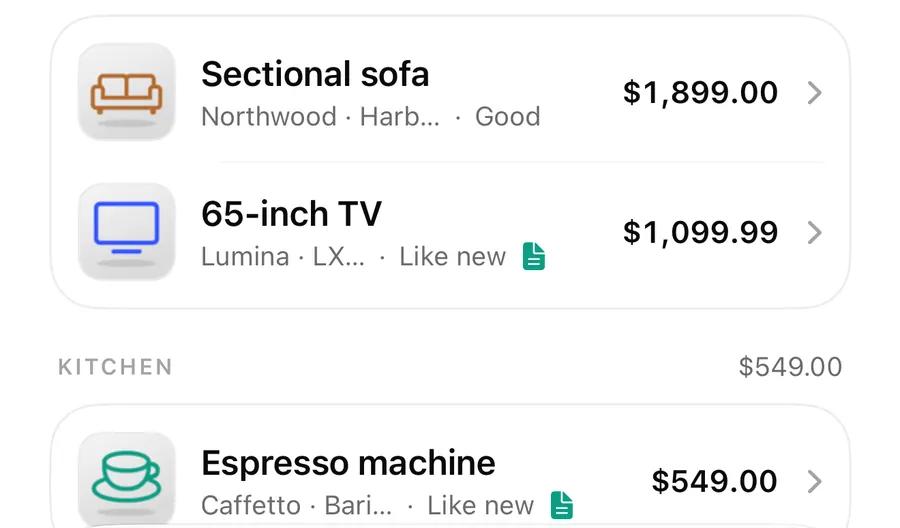
Read serial numbers from labels and fill in receipts with RoomLedger
Photograph a product label to fill in brand, model and serial number, scan a receipt for the date, total and store, all read on your iPhone and checked by you.
Read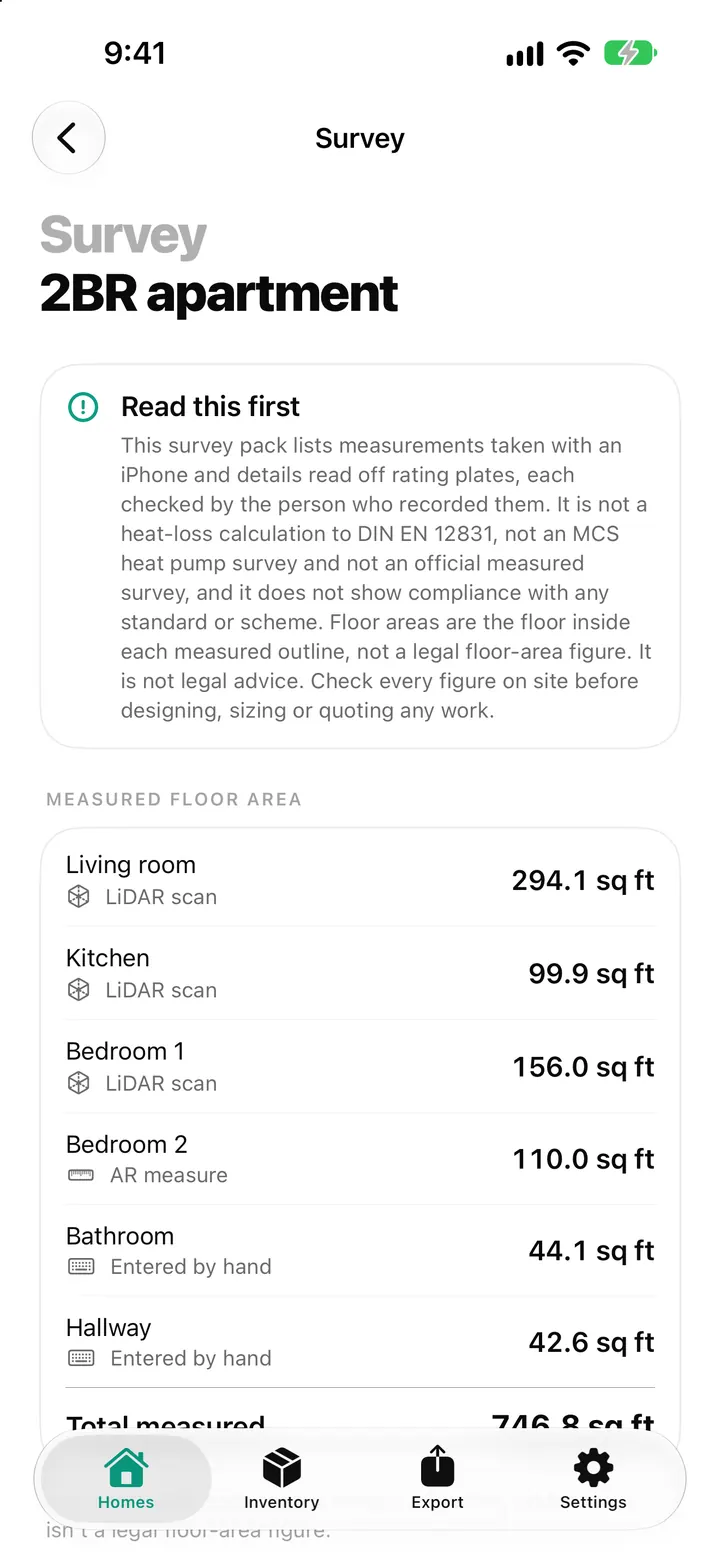
Survey pack: floor areas, windows and heaters for installers in RoomLedger
RoomLedger Pro's Survey screen gathers floor areas, windows and doors, glazing, frames and heater outputs into a PDF, a CSV and an IFC model for installers.
Read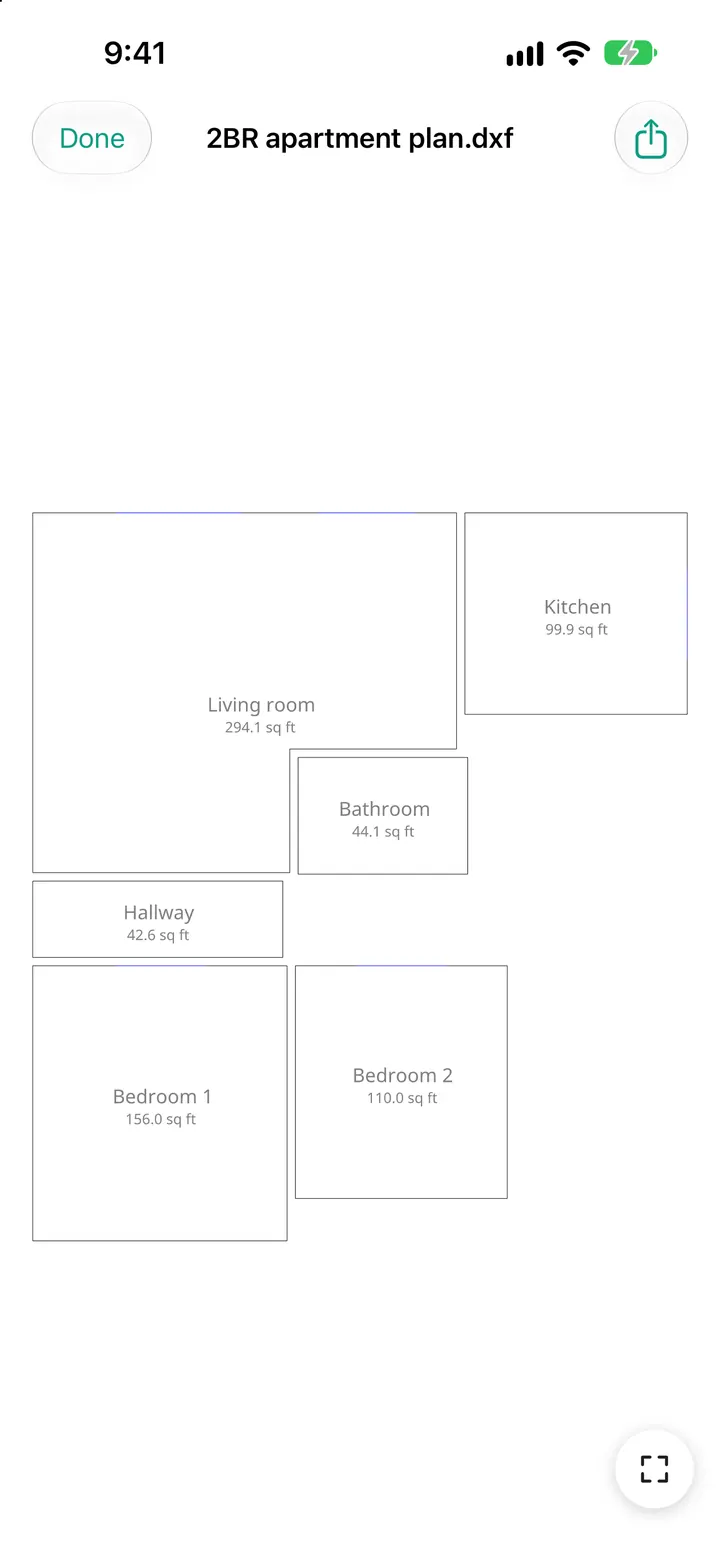
Export floor plans to DXF, SVG and IFC, and open CAD drawings in RoomLedger
Export measured rooms from RoomLedger as DXF or SVG plans, USDZ or OBJ models and IFC, then open an architect's DXF, IFC, STEP or PDF on your iPhone to compare.
Read